Bibliometric Analysis
1. Bibliometric Analysis
This section presents a quantitative characterization of the 71-paper corpus, examining publication trends, journal distribution, citation patterns, and thematic clustering.
1.1 Publication Trends Over Time
Figure displays the temporal distribution of the 63 papers from targeted and journal prestige searches (excluding 8 snowball papers) across four decades:
- 1990s: 5 papers (7.9\
- 2000s: 19 papers (30.2\
- 2010s: 23 papers (36.5\
- 2020s: 16 papers (25.4\
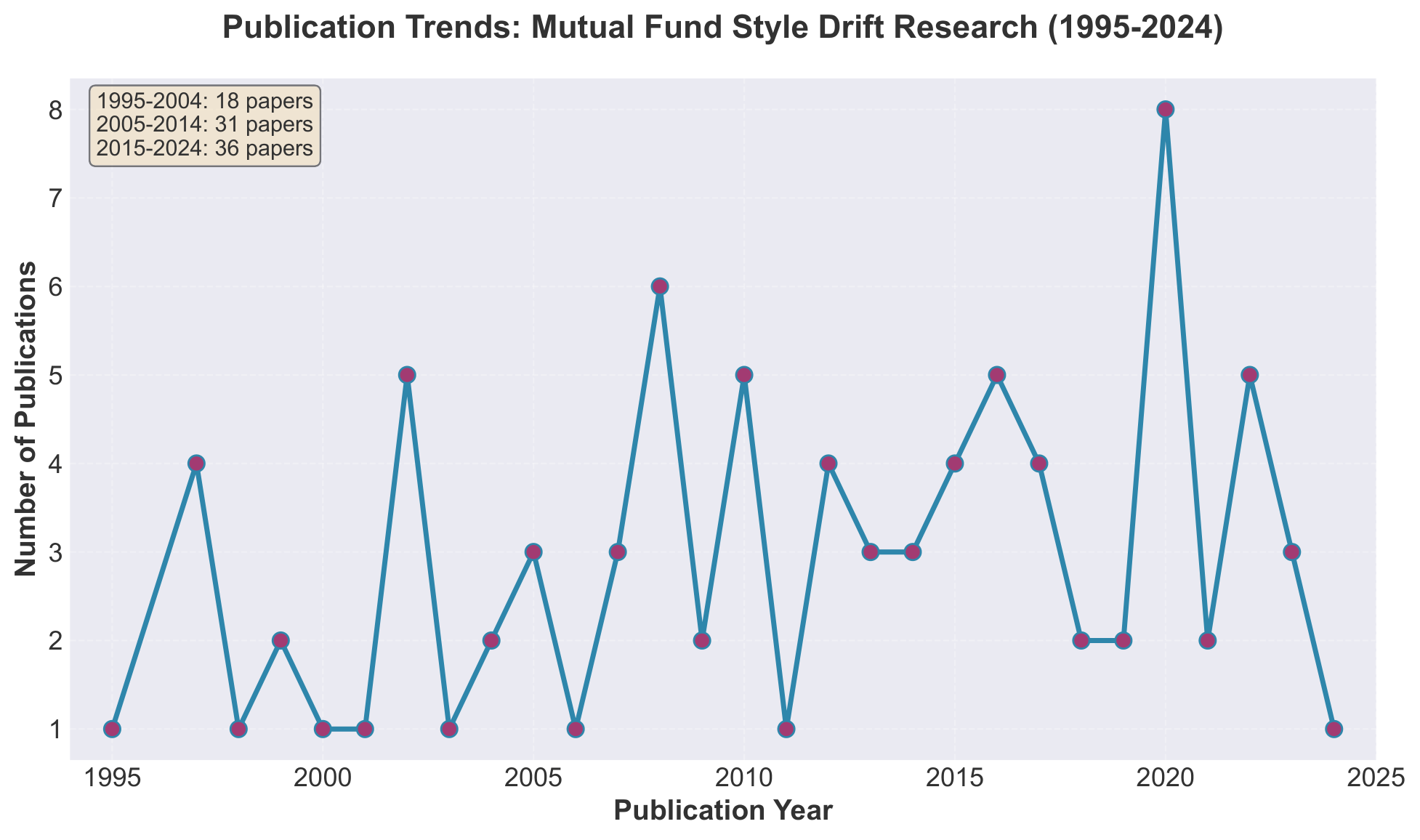
The temporal pattern reveals acceleration in research activity following methodological innovations. The introduction of Active Share in 2009 catalyzed a sustained increase in publications, with annual output roughly doubling from the 2000s average. The 2020s trajectory suggests continued momentum, particularly around ESG and regulatory themes.
1.2 Top Journals and Venues
The corpus spans 30 unique journals, with concentration in practitioner-oriented and top-tier academic outlets:
- Journal of Portfolio Management (9 papers, 13.8\
- Financial Analysts Journal (8 papers, 12.3\
- SSRN Electronic Journal (7 papers, 10.8\
- Journal of Financial and Quantitative Analysis (4 papers, 6.2\
- Review of Financial Studies (2 papers, 3.1\
- Journal of Finance (3 papers, 4.6\
The journal distribution reveals a distinctive feature of style drift research: strong practitioner engagement. Unlike purely theoretical finance subfields, style drift research has maintained consistent publication in practitioner journals throughout its development. The Journal of Portfolio Management and Financial Analysts Journal together account for nearly 25\
1.3 Citation Analysis
The corpus exhibits substantial citation impact, with aggregate citations of 6,580 (mean: 92.7, median: 38). Table presents the ten most-cited papers:
Table: Key Foundational Papers in Style Drift Research (Including Supplementary References) displays the distribution of papers across six thematic areas identified through keyword-based classification:
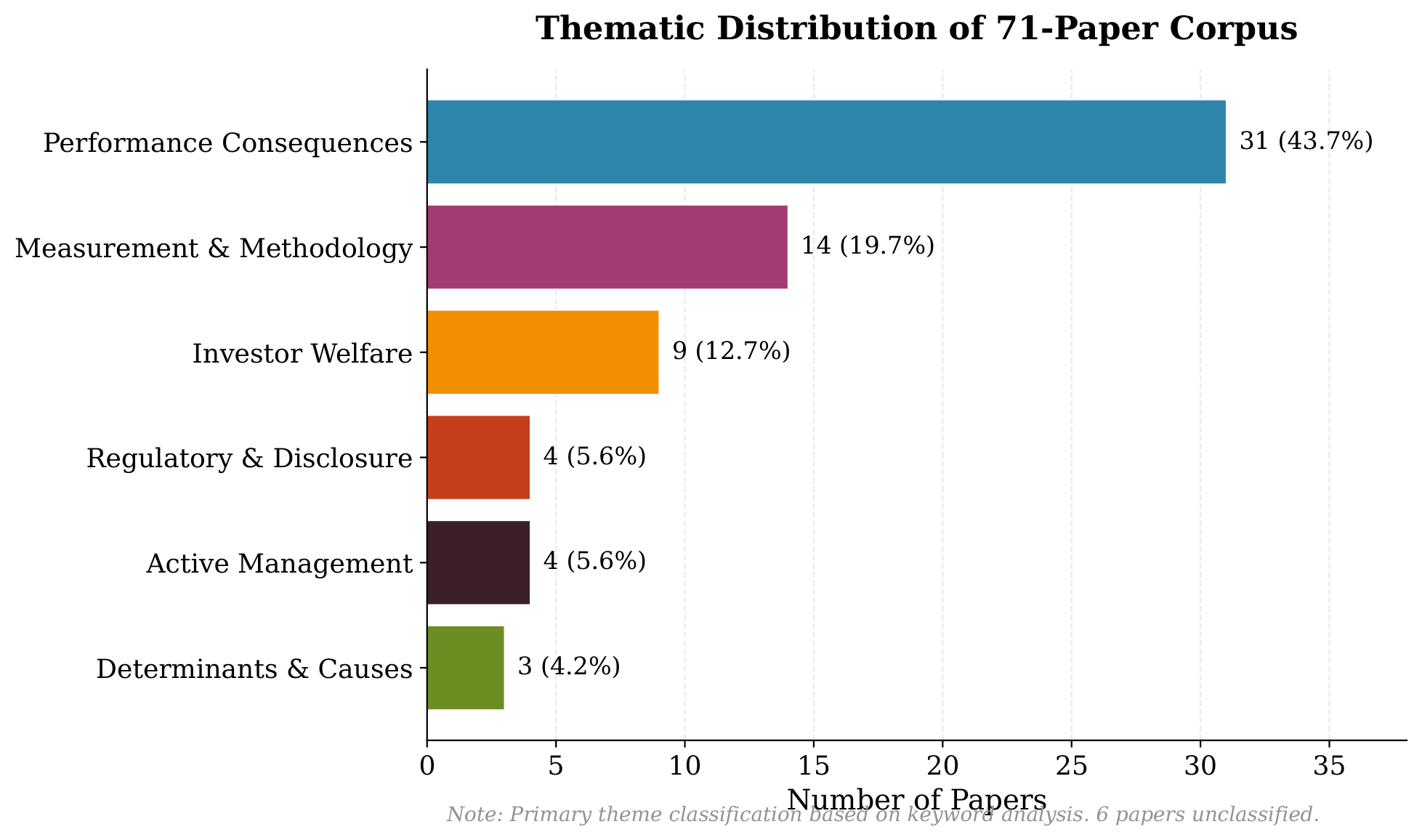
The six themes are:
- Performance Consequences (33 papers, 46.5\
- Measurement Methodologies (15 papers, 21.1\
- Investor Welfare (10 papers, 14.1\
- Regulatory Responses (5 papers, 7.0\
- Active Management Dynamics (4 papers, 5.6\
- Determinants and Causes (4 papers, 5.6\
The thematic distribution reveals two patterns. First, performance questions dominate the literature, accounting for nearly half of all papers, reflecting persistent interest in whether style drift generates or destroys value. Second, regulatory responses and determinants remain relatively underexplored despite their policy relevance.