Supervised Learning
Supervised Learning
Learning from labeled examples to make predictions on new data.
Learning Outcomes
By completing this topic, you will:
- Distinguish between regression and classification tasks
- Implement linear regression using OLS
- Evaluate model performance with appropriate metrics
- Understand the prediction workflow
Visual Guides
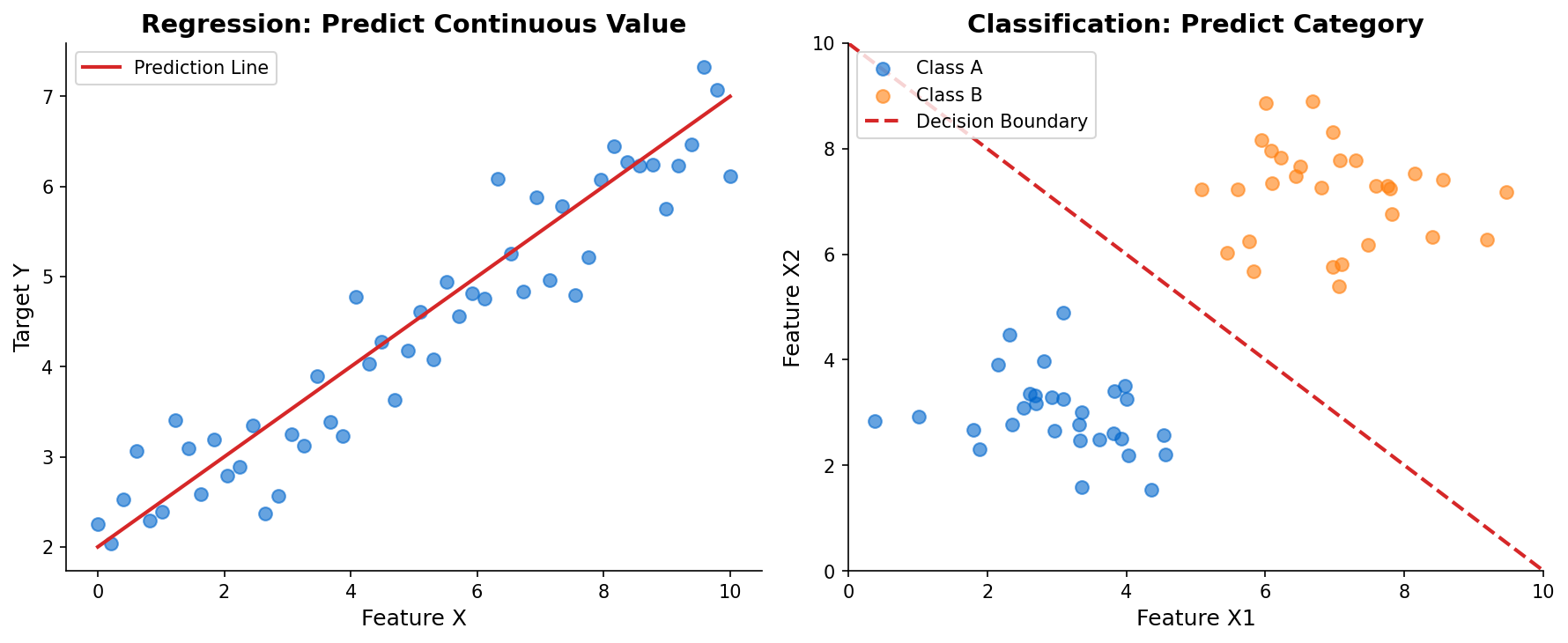
Regression vs Classification
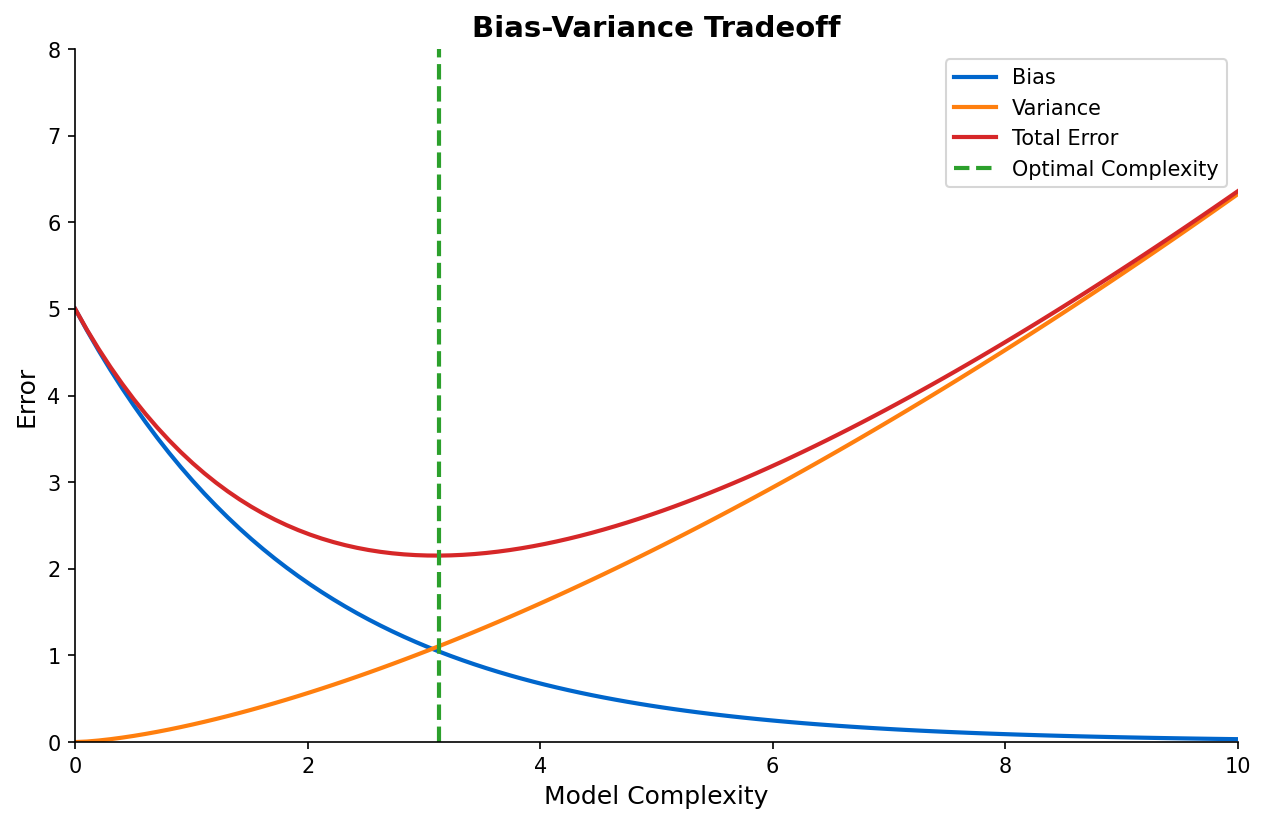
Bias-Variance Tradeoff
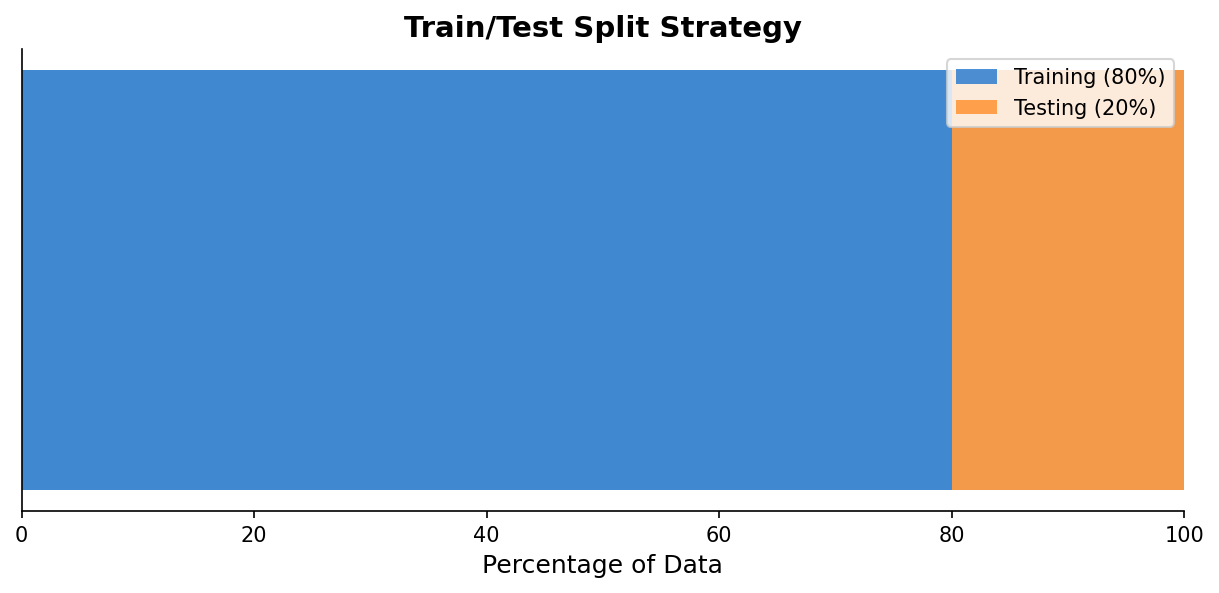
Train/Test Split
Prerequisites
- ML Foundations concepts
- Basic linear algebra (vectors, matrices)
- Understanding of mean squared error
Key Concepts
Regression vs Classification
- Regression: Predict continuous values (price, temperature)
- Classification: Predict discrete categories (spam/not spam, species)
Linear Regression
The foundation of predictive modeling:
- Ordinary Least Squares (OLS) minimizes squared errors
- Coefficients show feature importance
- R-squared measures explained variance
Model Evaluation
- Regression: MSE, RMSE, MAE, R-squared
- Classification: Accuracy, Precision, Recall, F1-score
When to Use
Supervised learning works when:
- You have labeled historical data
- The relationship between inputs and outputs is learnable
- Future data resembles training data
- Predictions drive decisions
Common Pitfalls
- Confusing correlation with causation
- Using accuracy on imbalanced datasets
- Ignoring feature scaling for distance-based methods
- Not validating on held-out data
(c) Joerg Osterrieder 2025