Neural Networks
Neural Networks
Deep learning architectures for complex pattern recognition.
Learning Outcomes
By completing this topic, you will:
- Explain how neurons and layers process information
- Describe forward and backward propagation
- Choose appropriate activation functions
- Understand when depth helps (and when it doesn’t)
Visual Guides
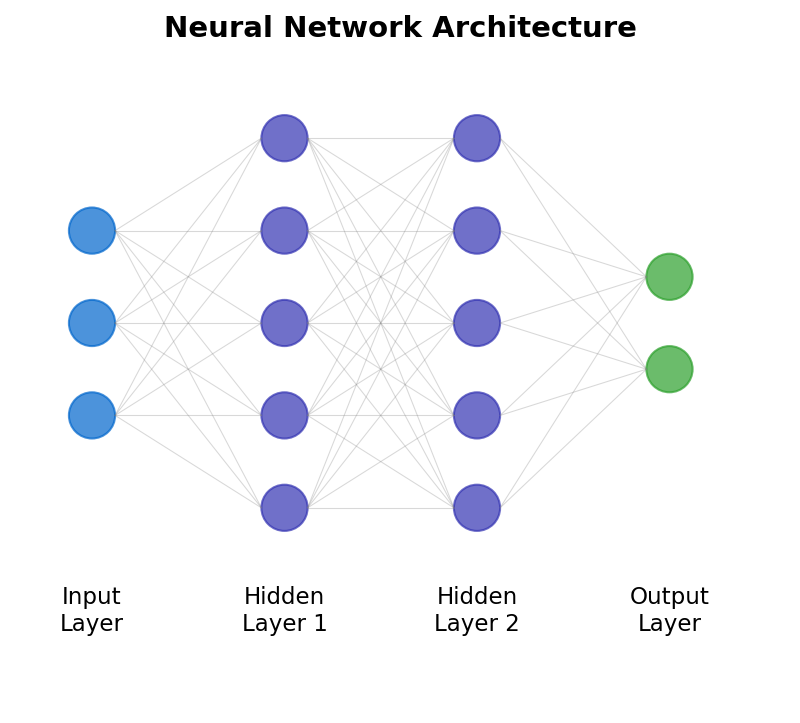
Network Architecture
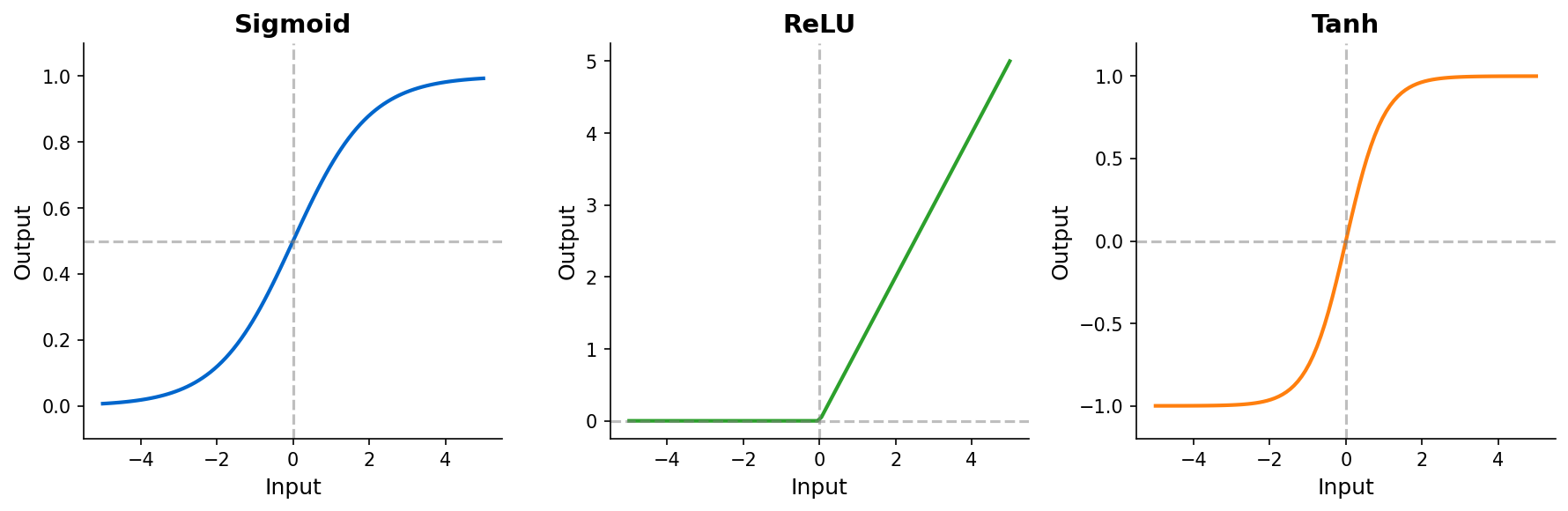
Activation Functions
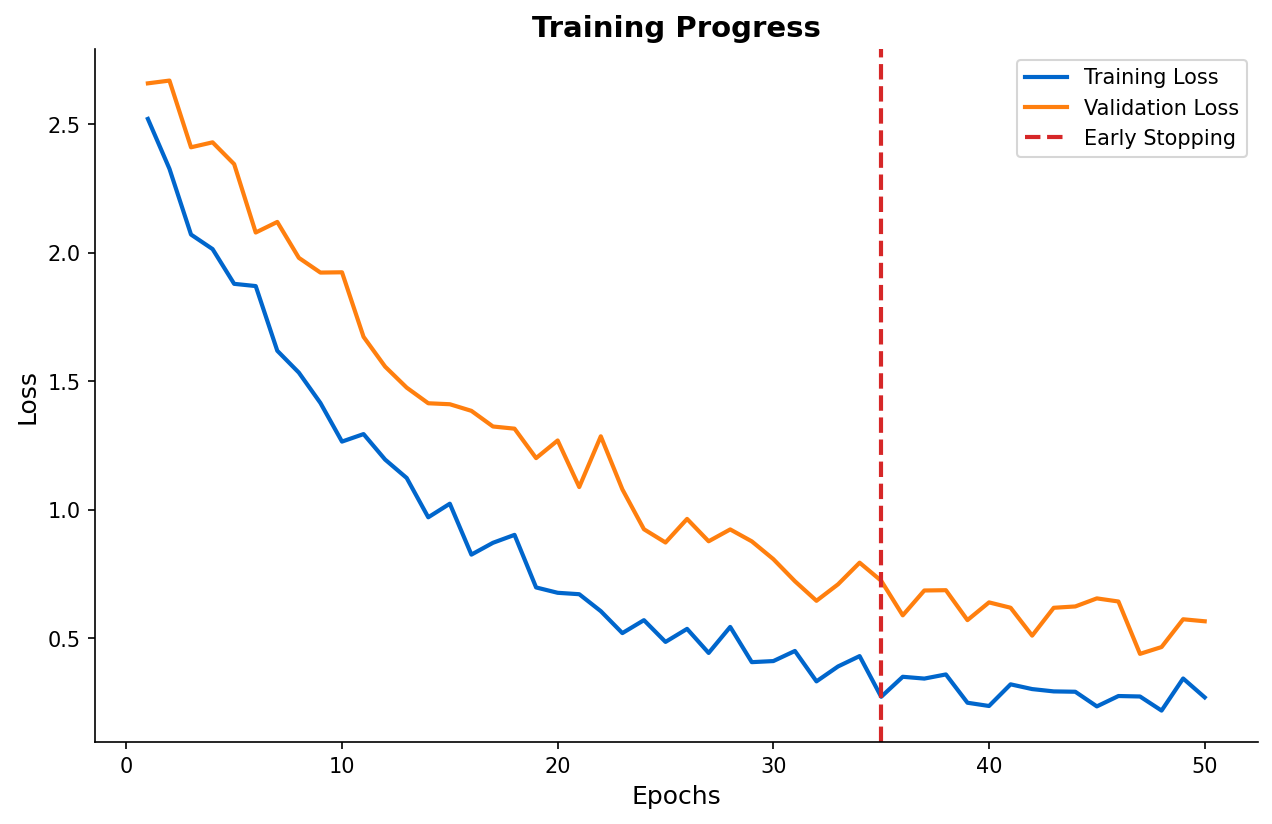
Training Progress
Prerequisites
- Supervised Learning concepts
- Basic calculus (derivatives, chain rule)
- Matrix operations
Key Concepts
Network Architecture
- Input layer: Receives features
- Hidden layers: Learn representations
- Output layer: Produces predictions
Activation Functions
- ReLU: Default for hidden layers (fast, avoids vanishing gradients)
- Sigmoid: Binary classification output
- Softmax: Multi-class classification output
Training Process
- Forward pass: Compute predictions
- Loss calculation: Measure error
- Backward pass: Compute gradients
- Update weights: Gradient descent
Common Architectures
- Feedforward: Basic fully-connected networks
- CNN: Image and spatial data
- RNN/LSTM: Sequential and time series data
When to Use
Neural networks excel when:
- You have large amounts of data
- Features require complex transformations
- Interpretability is less critical
- Computational resources are available
Common Pitfalls
- Too few training examples for network size
- Not normalizing inputs
- Learning rate too high or too low
- Vanishing/exploding gradients in deep networks
- Overfitting without regularization (dropout, weight decay)
(c) Joerg Osterrieder 2025