ML Foundations
Machine Learning Foundations
The starting point for understanding how machines learn from data.
Learning Outcomes
By completing this topic, you will:
- Understand the three main types of machine learning (supervised, unsupervised, reinforcement)
- Explain the difference between training and inference
- Identify overfitting and underfitting in model performance
- Apply the train-test split methodology
Visual Guides
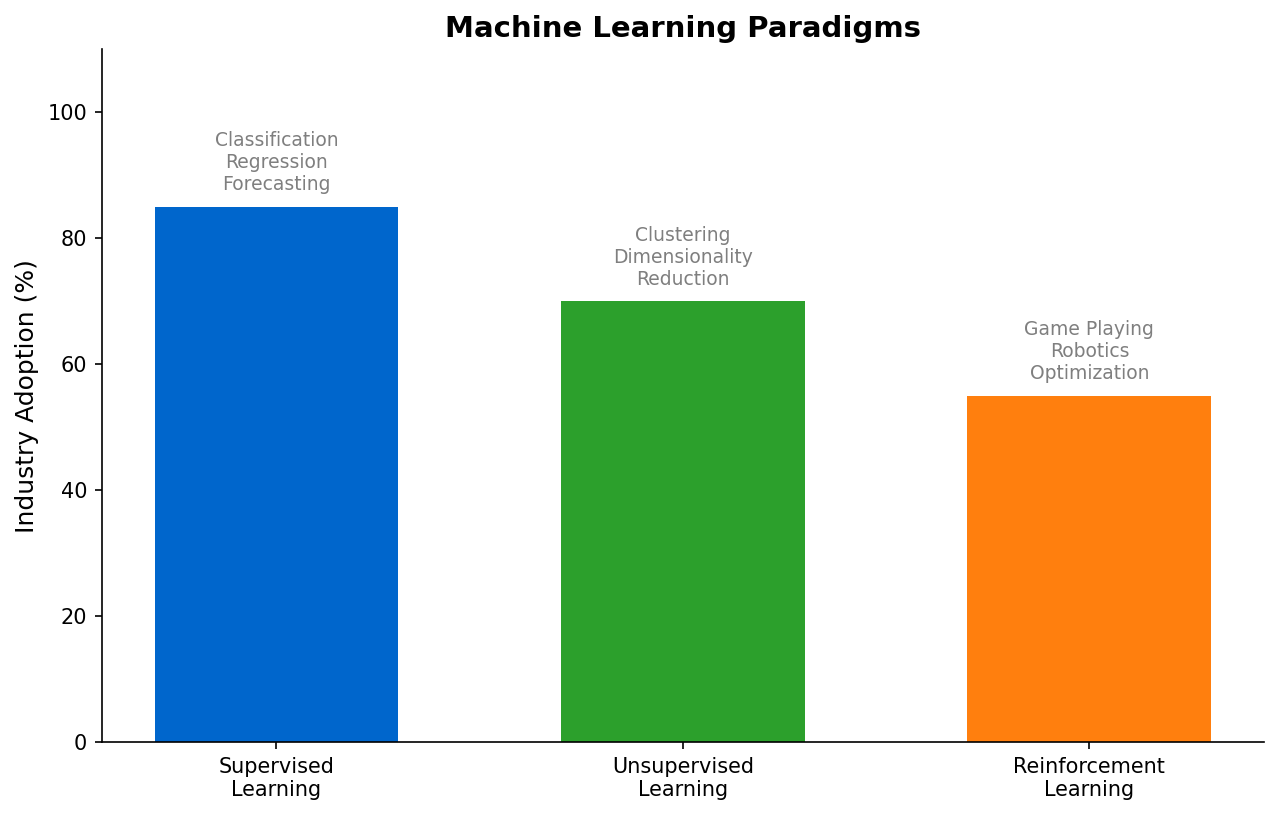
Learning Paradigms
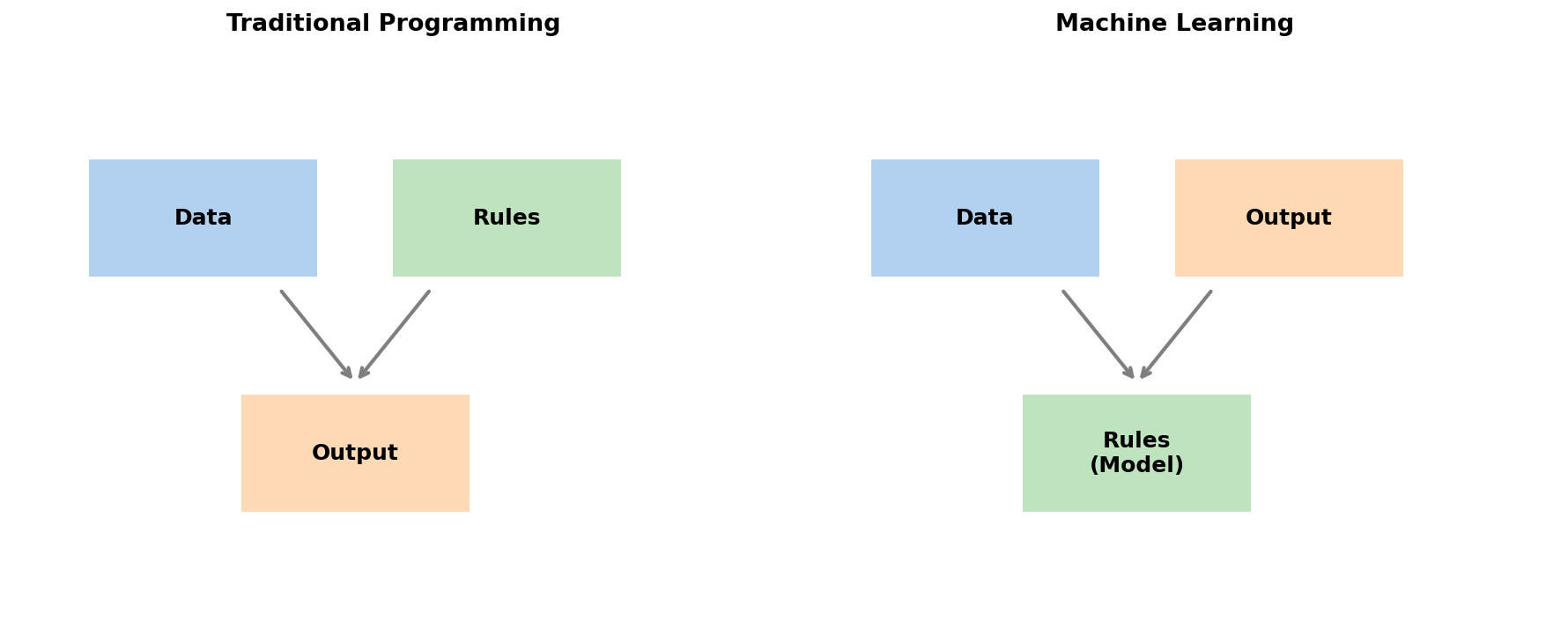
ML vs Traditional Programming
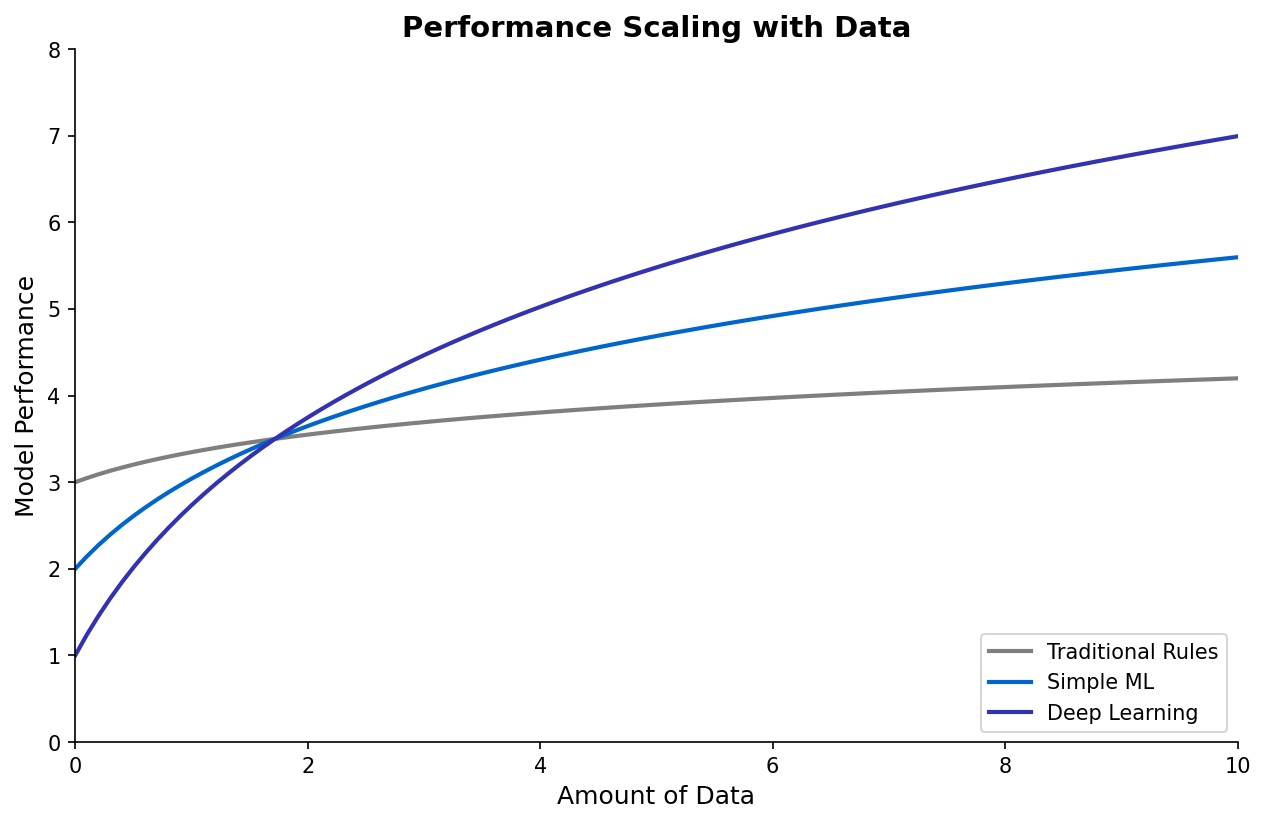
Performance Scaling
Prerequisites
No prior ML knowledge required. Basic familiarity with:
- Data concepts (rows, columns, features)
- Basic statistics (mean, variance)
Key Concepts
Types of Learning
- Supervised Learning: Learn from labeled examples (input-output pairs)
- Unsupervised Learning: Discover patterns without labels
- Reinforcement Learning: Learn through trial and reward
The Learning Process
- Collect and prepare data
- Choose a model architecture
- Train on training data
- Evaluate on test data
- Deploy and monitor
Bias-Variance Tradeoff
Balance between:
- High bias (underfitting): Model too simple, misses patterns
- High variance (overfitting): Model too complex, memorizes noise
When to Use
Machine learning is appropriate when:
- You have sufficient historical data
- Patterns exist but are hard to code manually
- Predictions or classifications add value
- The problem is well-defined
Common Pitfalls
- Training and testing on the same data (data leakage)
- Ignoring class imbalance in classification
- Not normalizing features with different scales
- Overfitting to small datasets
(c) Joerg Osterrieder 2025