Classification
Classification
Categorizing data into predefined classes using tree-based methods.
Learning Outcomes
By completing this topic, you will:
- Build and interpret decision trees
- Apply random forests for robust predictions
- Handle imbalanced classification problems
- Evaluate classifiers with appropriate metrics
Visual Guides
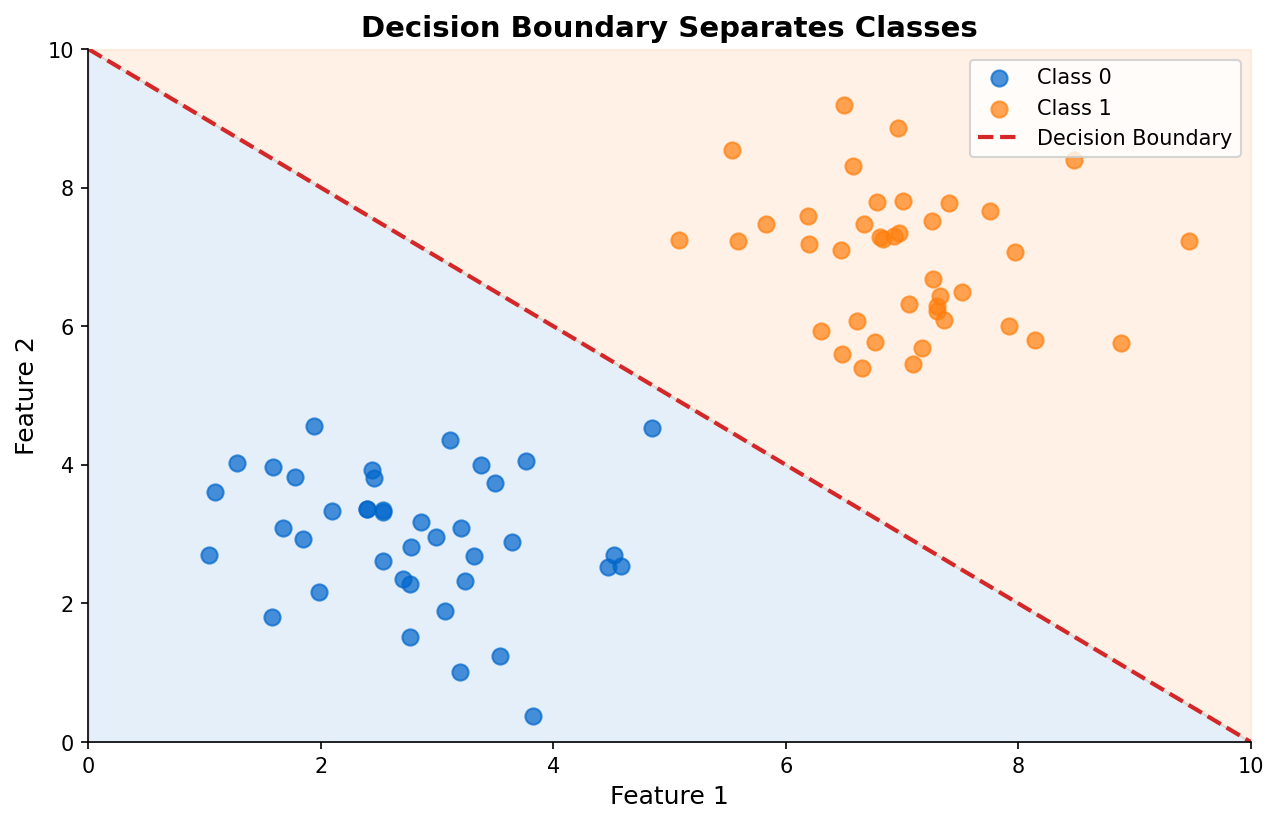
Decision Boundary
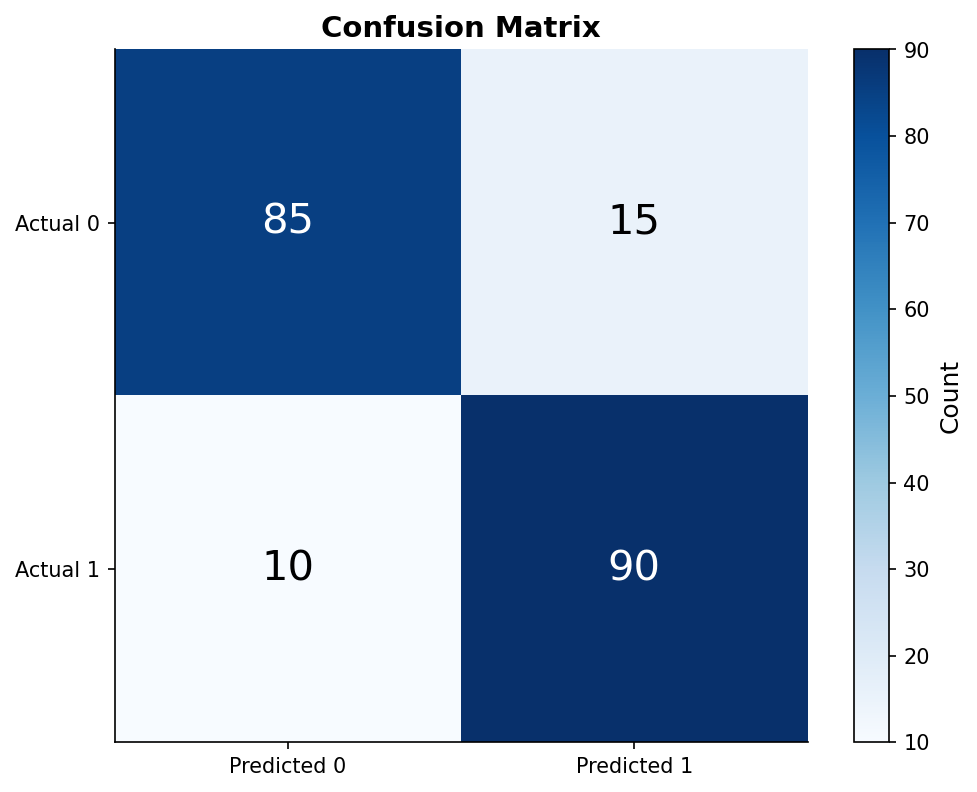
Confusion Matrix
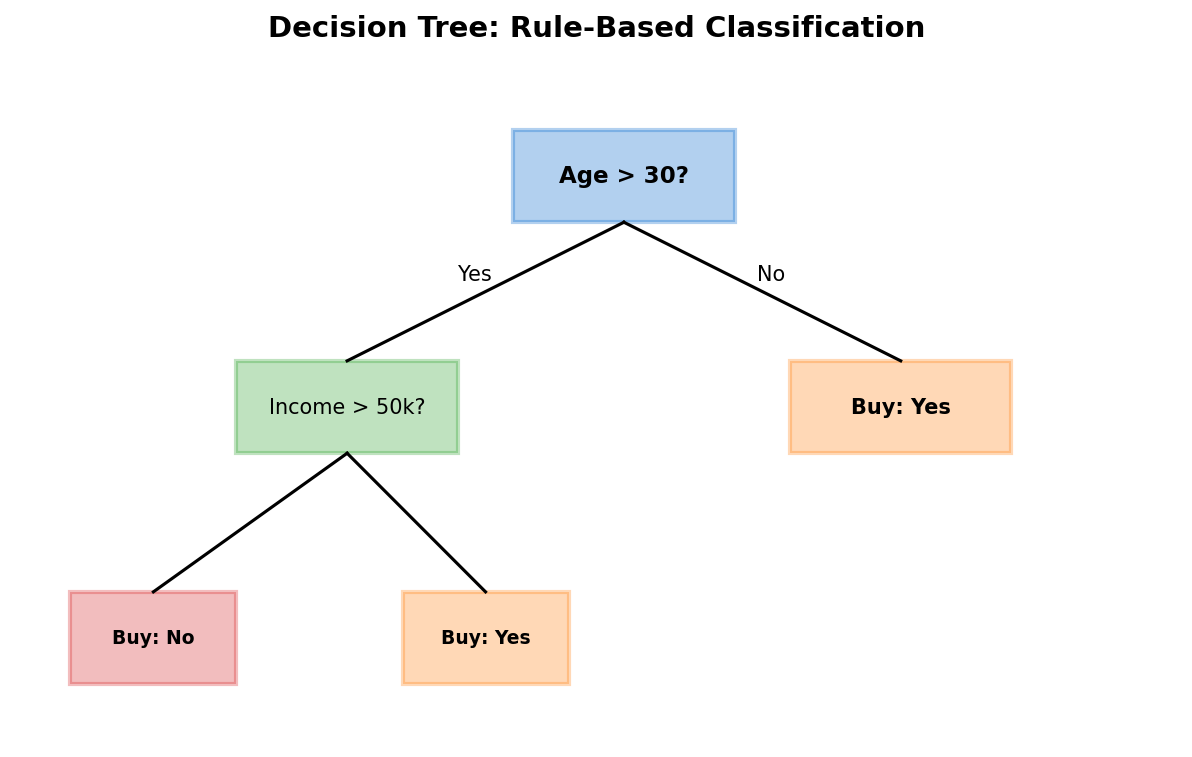
Decision Tree
Prerequisites
- Supervised Learning concepts
- Understanding of entropy and information gain
- Basic probability concepts
Key Concepts
Decision Trees
Interpretable rule-based classifiers:
- Split data based on feature thresholds
- Information gain guides split selection
- Pruning prevents overfitting
Random Forests
Ensemble of decision trees:
- Bootstrap aggregating (bagging)
- Random feature selection
- Reduced variance, improved accuracy
Evaluation Metrics
- Accuracy: Overall correctness
- Precision: True positives / predicted positives
- Recall: True positives / actual positives
- F1-score: Harmonic mean of precision and recall
- ROC-AUC: Discrimination ability
When to Use
| Method | Best For |
|---|---|
| Decision Tree | Interpretability, simple rules |
| Random Forest | Accuracy, feature importance |
| Gradient Boosting | Maximum performance |
Common Pitfalls
- Overfitting with deep trees
- Ignoring class imbalance
- Using accuracy on skewed datasets
- Not tuning hyperparameters
- Forgetting to scale features for some algorithms
(c) Joerg Osterrieder 2025