A/B Testing
A/B Testing
Statistical experimentation for data-driven decisions.
Learning Outcomes
By completing this topic, you will:
- Design valid A/B experiments
- Calculate required sample sizes
- Analyze results with statistical rigor
- Avoid common experimentation pitfalls
Visual Guides
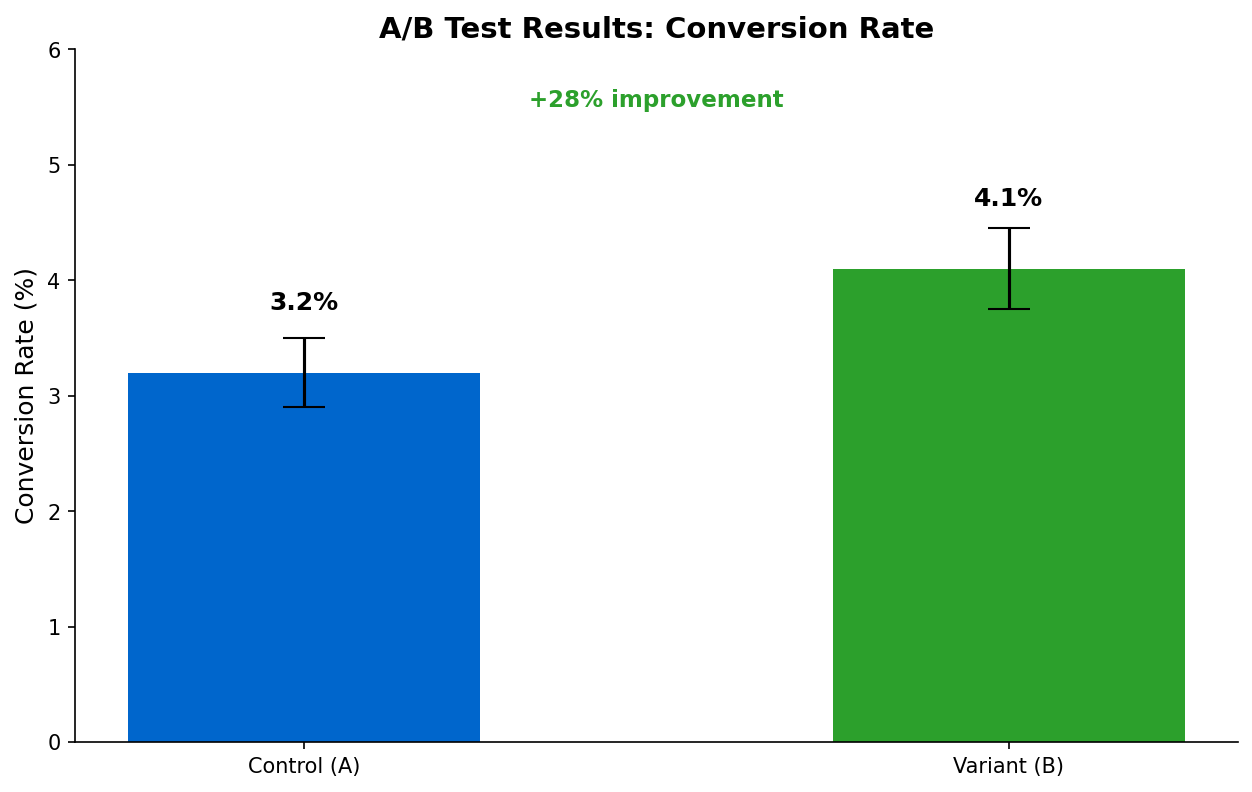
Conversion Rates
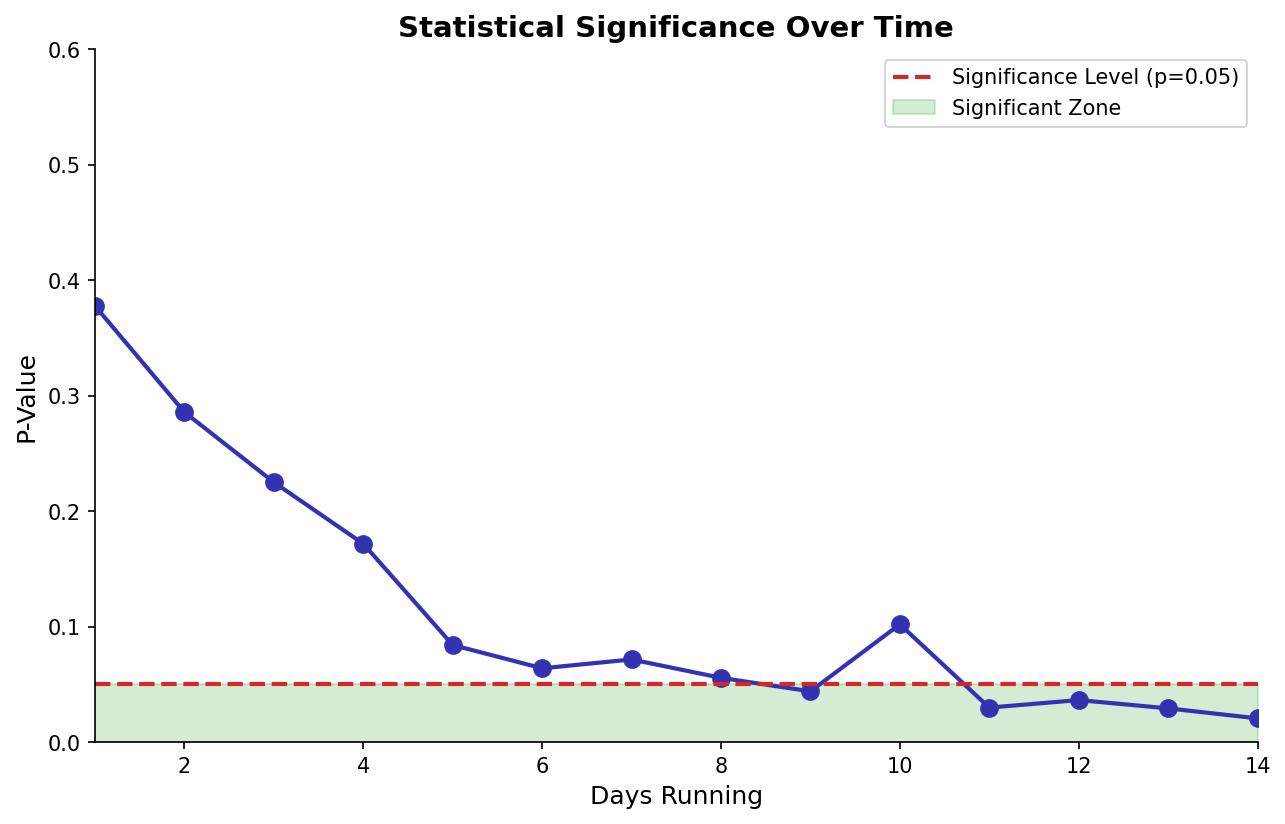
Statistical Significance
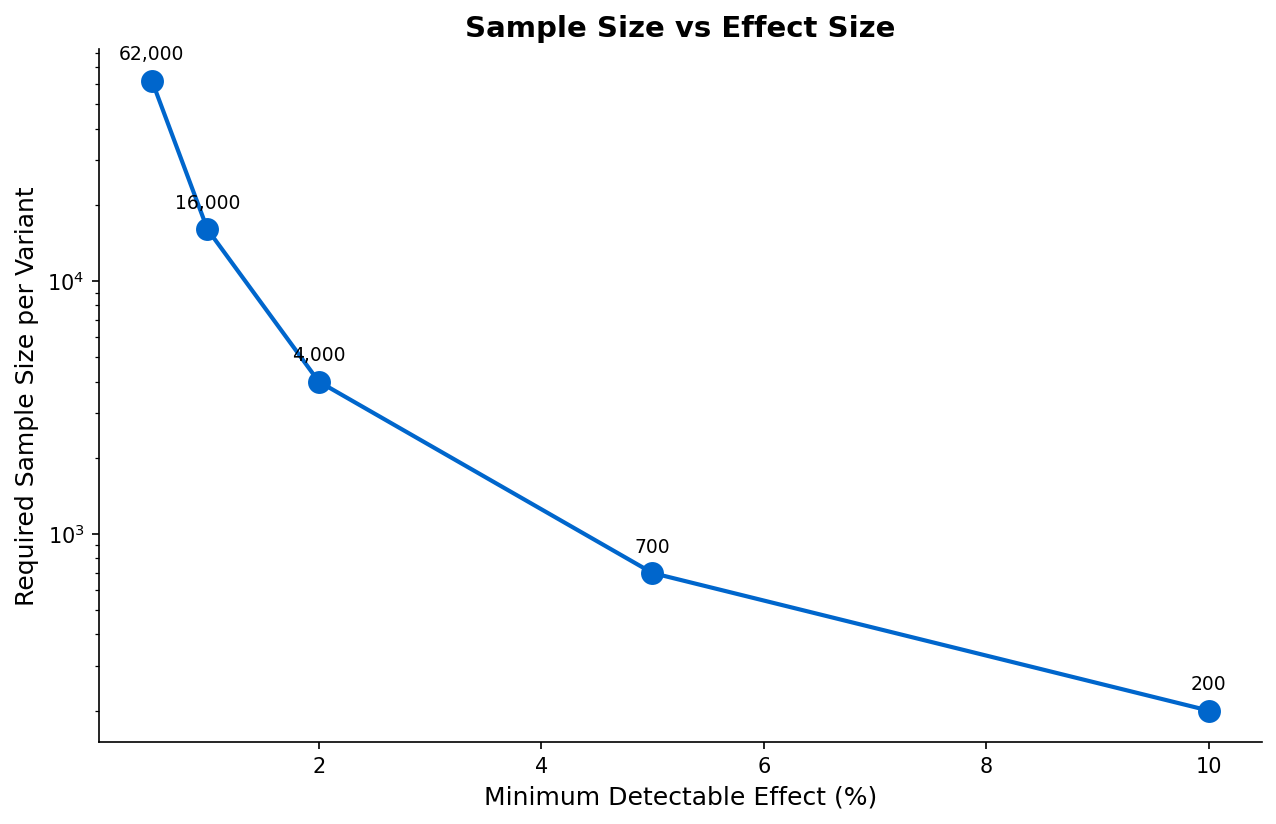
Sample Size Planning
Prerequisites
- Basic statistics (mean, variance)
- Hypothesis testing concepts
- Understanding of p-values and confidence intervals
Key Concepts
Experiment Design
- Define hypothesis and metrics
- Calculate sample size for power
- Randomize assignment
- Run experiment for planned duration
- Analyze and interpret results
Statistical Analysis
- Null hypothesis: No difference between variants
- p-value: Probability of result under null
- Confidence interval: Range of plausible effects
- Effect size: Magnitude of difference
Sample Size Calculation
Depends on:
- Minimum detectable effect (MDE)
- Statistical power (typically 80%)
- Significance level (typically 5%)
- Baseline conversion rate
When to Use
A/B testing is appropriate when:
- Changes can be randomized fairly
- Sufficient traffic for statistical power
- Metric is measurable and relevant
- Time allows for proper experiment
Common Pitfalls
- Stopping experiments early (peeking)
- Running multiple tests without correction
- Ignoring network effects
- Small sample sizes
- Wrong randomization unit
(c) Joerg Osterrieder 2025