Participant feedback on the training days, 15 and 16 October 2026
“organized” appears in 5 of 27 responses, more than any other word. 35 of the 114 words appear in two or more responses. Word size: number of responses that use the word. Hover over a word, or pick a theme further down, to see which words go with it.
The participants praise the content, the organisation and the exchange between countries
Lucian Blaga University of Sibiu sent 29 answers to the feedback form of the module training at the University of Twente on 15 and 16 October 2026, on 19 October, as one list without the questions of the form. Two of them repeat a prepared text and are left out. The clouds and charts count the other twenty-seven, and no answer is published.
Of the 27 answers, 13 name the content, 8 the organisation and 7 the exchange with participants from other countries; none criticises the training, and none makes a suggestion. They name the variety of the topics, data with its sources, real-world examples and the theory of viable sustainable finance. On organisation they name the schedule and call the training well organised and well structured. They call the trainers knowledgeable and supportive and the atmosphere welcoming and friendly.
Five answers mention teaching: a curriculum at the writer’s own institution, the delivery of the micro-credential, classroom methods, the suggested teaching activities, and applying what was learned in the writer’s own teaching.
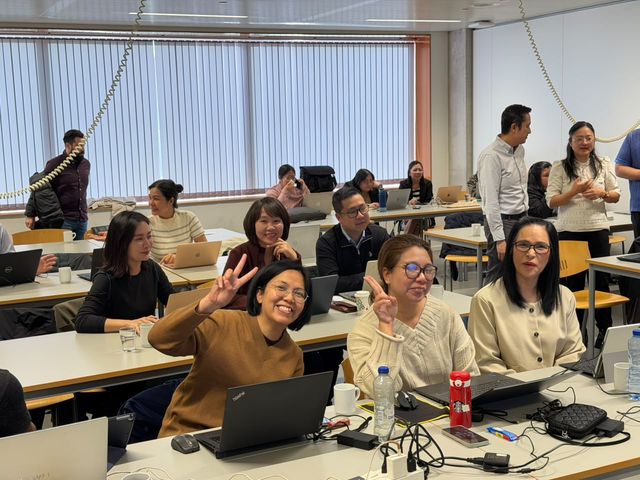
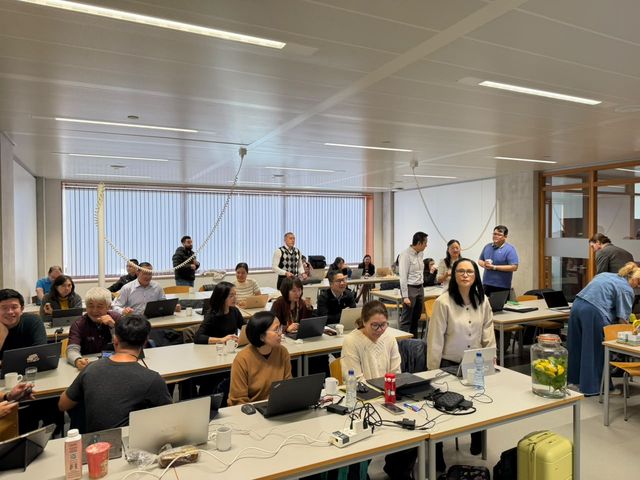
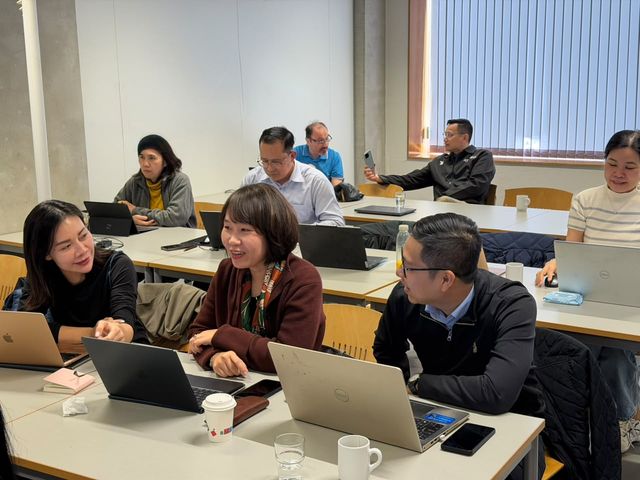
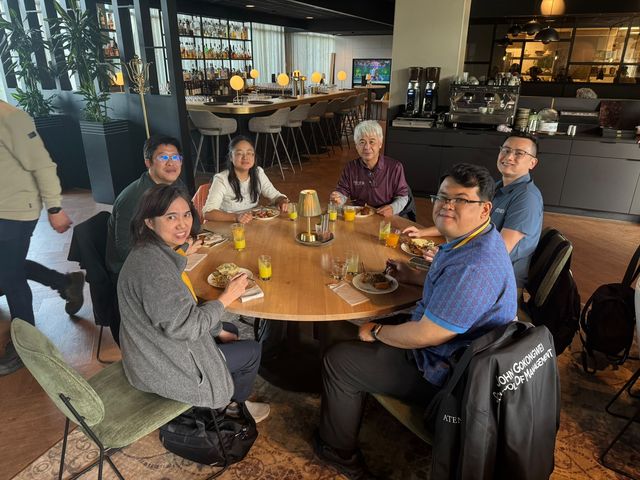
Sentiment of the responses
19 of the 27 responses use at least one positive word, 5 of them three or more. No response uses a word of criticism.
The 19 responses with a positive word, by how many different words from the list of 28 they use.
Positive words by kind
Words of quality and organisation appear in 13 responses; words of usefulness and learning appear in 9 responses; words of enjoyment, welcome and thanks appear in 8 responses.
Colour: kind of positive word. Size: number of responses that use the word. Pick a kind to pick out its words and links.
Positive words by theme
The thickest lines, 6 responses each, join words of quality and organisation to content and materials; words of quality and organisation to organisation and structure; words of usefulness and learning to content and materials.
Each line joins a kind of positive word to a theme. Width: number of responses that use a word of that kind and name that theme.
Phrases in the responses
“well organized” is the most frequent phrase, in 4 responses; 5 phrases appear in two or more.
Runs of two to five counted words. Size: number of responses that use the phrase.
Themes in the responses
13 of 27 responses mention content and materials, 8 mention organisation and structure and 7 mention exchange across countries.
Bar length: share of the 27 responses. Pick a theme to pick out its words in the clouds.
Themes per response
Of the 27 responses, 16 name one theme, 10 name two or more and 1 names none of the eight.
Themes named together
Two pairs are named together most often, in 4 responses each: content and materials with trainers and speakers and exchange across countries with discussion and participation.
Each square: number of responses that name both themes. Darker squares: more responses.


Words behind each theme
Each theme gathers the responses that use one of its words. Size: number of responses that use the word.
How the words are counted
- A word is a run of letters, with hyphens and apostrophes inside it; numbers are not words.
- Sizes count responses: a word used three times in one response counts once. Ties are ordered by total uses, then alphabetically. The words cloud shows the 100 most used of the 114 words and the phrases cloud all 37 phrases.
- Left out of the words cloud: common English words such as the, and and of; the fillers able, going, since, especially, particularly, specifically and every; the word training; the well of well-organised; weekday and month names; number words; and the names of people.
- Counted as one word: organised and organized, organisation and organization, a plural and its singular where both occur, a possessive and its noun, and a misspelling and its correct spelling.
- Positive words, in three kinds:
- Quality and organisation: organized, structured, comprehensive, informative, effective, knowledgeable, supportive, great, good
- Usefulness and learning: useful, helpful, valuable, practical, gain, opportunity, insights, applying
- Enjoyment, welcome and thanks: enjoyed, like, interesting, engaging, interactive, appreciated, welcoming, friendly, active, thanks, look forward
- A response counts towards a theme when it contains one of the theme's words:
- Content and materials: content, topic, material, data, source, informative, knowledge, concept, lesson, module, theory, model, example, insight
- Organisation and structure: organized, organised, organisation, structured, schedule, coordinators, preparation, programme
- Exchange across countries: country, international, network, exchange, share, sharing, colleague, perspective, connection, each other, delegate
- Trainers and speakers: trainer, speaker, lecture, expert, knowledgeable
- Teaching and curriculum: teaching (not before day), classroom, curriculum, micro-credential, deliver, applying, foundation
- Discussion and participation: interactive, engaging, participation, discuss, discussion
- Atmosphere and hospitality: atmosphere, welcome, welcoming, friendly, hospitality, environment, lunch, dinner
- Thanks: thank, thanks, good job
The week’s page holds the programme, the rooms and who attended.
GREEN FINANCE: Advancing Higher Education for Sustainable Growth in Southeast Asia. Erasmus+ Capacity Building in Higher Education, Strand 2. Grant Agreement No. 101237817.