GREEN FINANCE Training Programme#
The training programme builds capacity among ASEAN partner staff to develop and deliver the green finance micro-credential curriculum.
Programme Overview#
2
Training Sessions
1 Week
Each Session
24
Asian Staff
M11
October 2026
Training Structure#
Two-Session Approach#
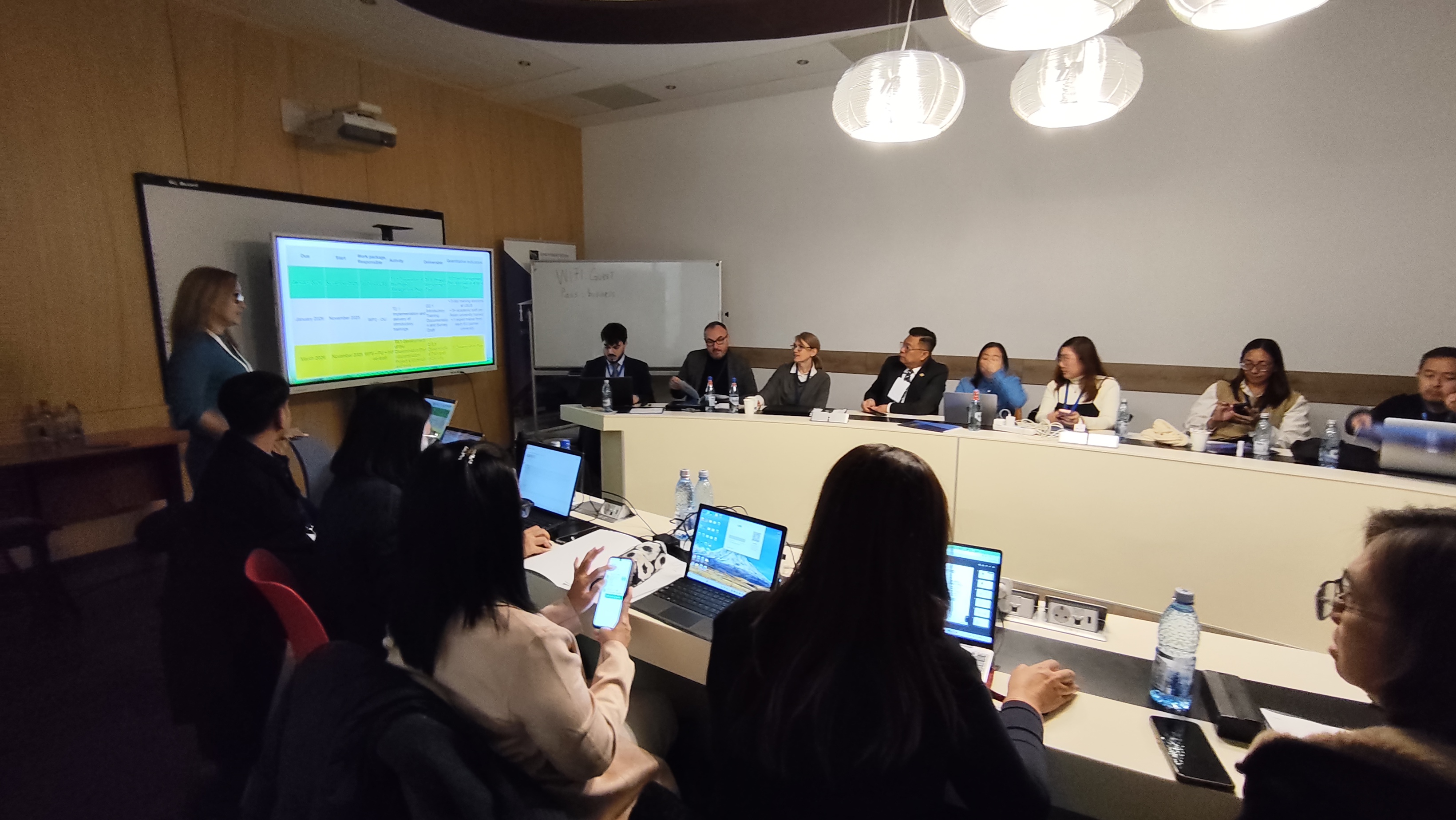
The training is delivered through two parallel one-week sessions, each led by specialized EU partner teams:
| Session | Location | Team | Focus |
|---|---|---|---|
| Session 1: UT | University of Twente, Netherlands | Team 1 | Fundamentals, Global Contexts & Reporting |
| Session 2: Opole | University of Opole, Poland | Team 2 | Products & Risk Management |
Participant Distribution#
Each Asian partner university sends 4 academic staff:
- 2 staff attend Session 1 (UT)
- 2 staff attend Session 2 (Opole)
| Partner | Session 1 (UT) | Session 2 (Opole) | Total |
|---|---|---|---|
| BUH (Vietnam) | 2 | 2 | 4 |
| BAV (Vietnam) | 2 | 2 | 4 |
| PU (Thailand) | 2 | 2 | 4 |
| WU (Thailand) | 2 | 2 | 4 |
| ADMU (Philippines) | 2 | 2 | 4 |
| WVSU (Philippines) | 2 | 2 | 4 |
| Total | 12 | 12 | 24 |
Training Timeline#
Schedule (Month 11 - October 2026)#
Week 1: Session 1 at University of Twente (Team 1)
├── Day 1: Module 1 - Green Finance: Fundamentals and Building Blocks
├── Day 2: Module 2 - Green Finance in Global, EU and ASEAN Contexts
├── Day 3: Module 5 - Green Reporting: Transparency, Accountability and Risk Communication
├── Day 4: Teaching Methodology Workshop
└── Day 5: Local Adaptation Planning

Week 2: Session 2 at University of Opole (Team 2)
├── Day 1: Module 3 - Green Finance Products and Services
├── Day 2: Module 4 - Green Finance Risk Management
├── Day 3: Assessment Design Workshop
├── Day 4: Industry Engagement Strategies
└── Day 5: Implementation Planning
Learning Objectives#
Upon completing the training programme, participants will be able to:
- Deliver core curriculum content with confidence
- Adapt materials to local ASEAN contexts
- Design assessments aligned with competency outcomes
- Engage industry partners for guest lectures and internships
- Support students through the micro-credential programme
Training Methodology#
Approach#
The training uses a cascade model:
- EU experts train ASEAN academic staff
- Trained staff develop local curriculum adaptations
- Local teams deliver to students with EU support
Methods#
| Method | Purpose | Hours |
|---|---|---|
| Lectures | Content deep-dive | 15 |
| Workshops | Hands-on practice | 10 |
| Group Work | Adaptation planning | 8 |
| Presentations | Peer learning | 4 |
| Site Visits | Industry exposure | 3 |
Pre-Training Requirements#
For Participants#
Before attending training sessions, participants should:
- Review core curriculum modules
- Complete pre-reading assignments
- Prepare local context briefing
- Identify potential industry partners
- Draft adaptation needs assessment
Materials Provided#
- Complete curriculum package (5 modules)
- Teaching guides and instructor notes
- Assessment templates and rubrics
- Adaptation framework and templates
- Reference library access
Post-Training Support#
Ongoing Assistance#
EU partners provide continued support through:
- Monthly calls: Progress review and Q&A
- Materials updates: Annual curriculum refresh
- Operational missions: EU expert visits to Asia (M19-22)
- Online resources: Shared drive and communication platform
Training Sessions#
(c) GREEN FINANCE Consortium 2026